The seven longest ducks in the history of Test cricket – heroic and not so heroic zeroes


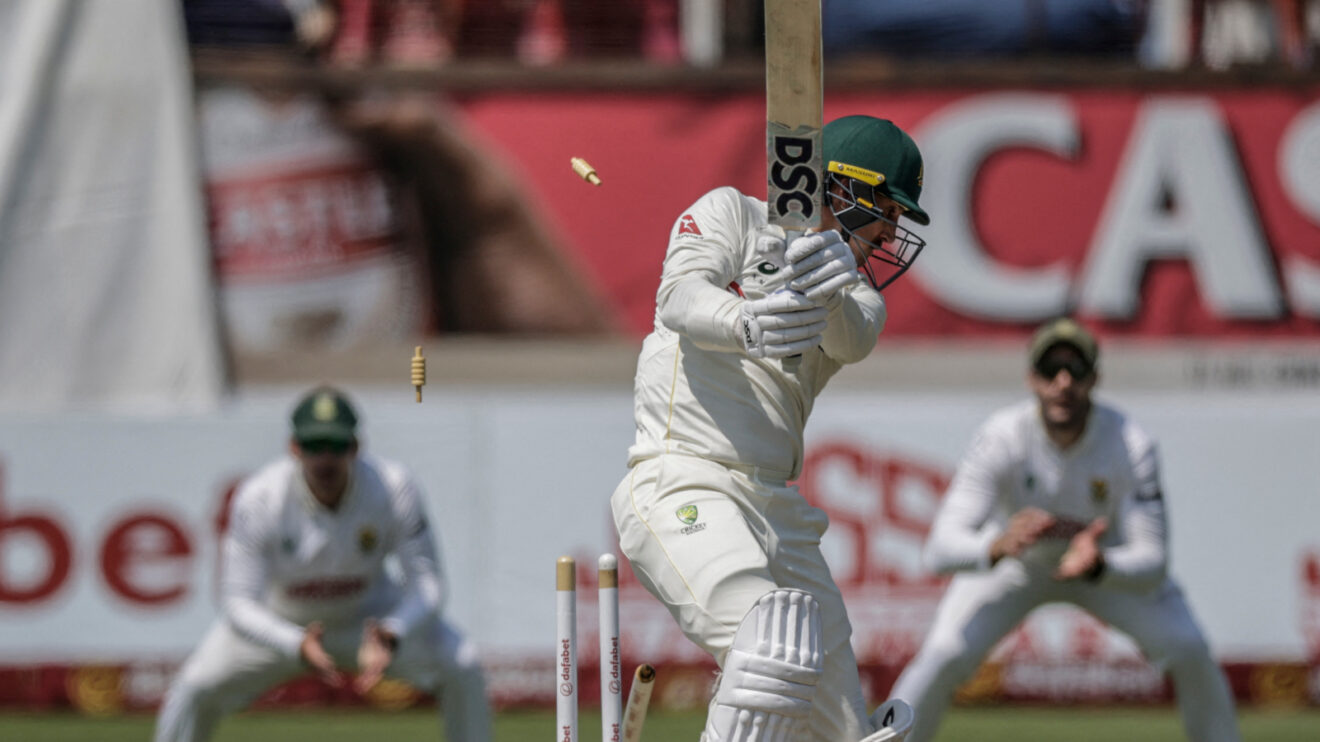
The opening Test match between South Africa and Australia at Kingsmead in Durban provided cricket fans with an extraordinary display of patience from Nic Maddinson eventually ending in heartbreak.
The recalled Australian opening batsman endured a somewhat tortured return to the crease. Surviving for thirty-three deliveries without troubling the scorers, Maddinson eventually fell for a memorable 33-ball duck.
While his valiant effort to survive put him sixteenth on the all-time list for the most balls faced before getting out for zero, it highlighted a unique art form in Test cricket.
Sometimes, the battle to simply survive overrides the need to score runs. Over the long history of the format, several batsmen have spent prolonged periods at the crease, blocking delivery after delivery, only to be dismissed without a single run to their credit.
Here’s a look at the seven longest ducks in Test match history ranked by balls faced.
1. Geoff Allott (New Zealand) – 77 balls
The gold standard for defensive survival ending in zero belongs to Kiwi tailender Geoff Allott. In a 1999 Test match against a ferocious South Africa bowling attack in Auckland, Allott put on a masterclass in defiance.
He remained at the crease for a staggering 101 minutes, shielding the recognized batsmen and facing seventy-seven deliveries.
He did not score a single run during his marathon stay. When he was finally dismissed by Jacques Kallis, he left the field having anchored a crucial partnership that helped New Zealand secure a famous draw.
His epic 77-ball stay remains the longest duck in the history of international cricket.
2. James Anderson (England) – 55 balls
England’s legendary fast bowler James Anderson is well known for his skills with the ball, but he has also played some incredibly gritty innings as a nightwatchman and lower-order batsman.
His most dramatic batting survival came against Sri Lanka at Headingley in 2014.
With England fighting hard to save the Test match on the final afternoon, Anderson blocked everything thrown at him.
He faced fifty-five deliveries across eighty-one minutes of intense pressure. Tragically, with just two balls remaining in the match, he was caught loopily off a short ball, ending his courageous rear-guard for a 55-ball duck and handing Sri Lanka a dramatic victory.
Also read: India’s seven very best batters against the Windies over the years
3. Richard Ellison (England) – 52 balls
An elegant swing bowler from the nineteen eighties, Richard Ellison found himself in a massive battle against India at Chennai in 1984.
Facing a highly disciplined Indian bowling unit in spinning conditions, Ellison decided that defence was his only option. He ground out an astonishing fifty-two deliveries without ever finding a gap in the field or rotating the strike.
His fighting stay finally ended when he was dismissed for zero.
4. Peter Such (England) – 51 balls
England off-spinner Peter Such was never renowned for his batting skills, but he earned a special piece of cricket history against New Zealand at Old Trafford in 1999. Coming into the middle during a difficult phase of the game, Such decided to block out the opposition entirely.
He faced fifty-one balls without scoring a single run, showing incredible concentration and an absolute refusal to play any risky shots.
His stubborn resistance finally came to an end when he was dismissed for zero, marking the second time an England player crossed the fifty-ball barrier for a duck.
5. Miguel Cummins (West Indies) – 45 balls
West Indian fast bowler Miguel Cummins provided a memorable display of modern rear-guard batting against India at North Sound in 2019.
Coming into the game with his team under heavy pressure, Cummins decided to lock down his defence. He supported his batting partner by playing out forty-five deliveries, showing extraordinary discipline against a world-class Indian attack.
He fell for zero after a prolonged stay at the crease, but his gritty performance earned him immense respect .
6. Mike Whitney (Australia) – 42 balls
Australian fast bowler Mike Whitney is remembered for his incredible courage, and his legendary batting performance against New Zealand at the Sydney Cricket Ground in 1987 is proof of that trait.
With Australia fighting desperately to save the Test match on the final day, Whitney walked out to face a fired-up Kiwi bowling attack. He displayed remarkable resolve, defending forty-two deliveries without scoring a run.
His incredible blockathon allowed Australia to successfully draw the game, turning his 42-ball duck into a heroic moment in Australian cricket history.
7. Shoaib Akhtar (Pakistan) – 42 balls
The Rawalpindi Express, Shoaib Akhtar, was famous for his extreme bowling pace, but he also holds a surprising spot on the list of longest defensive batting stints.
Not generally remembered as a batsman who held much back, against England at Faisalabad in 2005, Akhtar suppressed his usual aggressive instincts to play a highly defensive role for his team.
He faced forty-two balls without getting off the mark, showing great determination against a lethal English bowling combination. He was eventually dismissed for zero, matching Whitney on the historical list.
Read next: Five Test batters plagued by the DRS ‘paranoia index’