The 7 biggest T20 World Cup absentees – what a pity
With the T20 World Cup set to start in early February, the best white ball cricketers from around the world are preparing to assemble in India and Sri Lanka to do duty for their nations.
The tournament will feature four groups of five teams and with each squad comprised of 15 players, that means there will be 300 of the best T20 players from around the world playing in the tournament. But who will not be there
While many big names will be absent following their retirement from international cricket; players like Heinrich Klaasen and Nicholas Pooran, which players who are still available for selection are missing due to loss of form, injury or simply because they are out of favour.
Here’s seven stars who will not be at the T20 World Cup.
1. Shubman Gill (India)
Few omissions are as surprising as that of Shubman Gill. Widely regarded as one of India’s premier batters across all formats, Gill has found himself squeezed out of a T20 setup that is increasingly prioritising specialists.
While his ODI numbers remain exceptional, his strike rate in T20 internationals has fluctuated and selectors appear unconvinced that his measured approach suits the high tempo demanded on India and Sri Lanka surfaces.
India have instead doubled down on aggressive openers and flexible middle order options, leaving Gill watching a major global event from home.
2. Ottneil Baartman (South Africa)
Baartman’s absence is one that may sting South Africa supporters who have watched his steady rise in white ball cricket.
The seam bowler has repeatedly impressed in domestic competitions and was not only the leading wicket taker in the just completed SA20, but he is also the tournament’s all time leading bowler.
The Proteas tend to favour all-out pace and in Kagiso Rabada and Anrich Nortje they have that – Baartman is about variations and accuracy.
He has earned limited international opportunities, but a combination of injuries and intense competition among South Africa’s fast bowling ranks has worked against him.
With the Proteas opting for express pace and all-round versatility, Baartman has slipped just outside the final cut despite remaining firmly on the selectors’ radar.
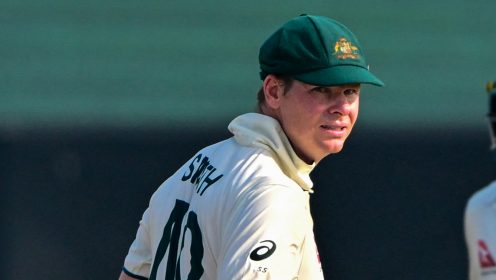
3. Steve Smith (Australia)
Steve Smith remains one of Australia’s finest batters, but T20 cricket has increasingly become a format where reputation counts for little.
Smith’s ability to anchor an innings is unquestioned, yet Australia have moved towards younger, more explosive options who can clear the ropes from ball one.
Smith’s recent international T20 outings did little to change perceptions, and his omission reflects a strategic decision rather than a dramatic decline. At 35, he remains available but no longer central to Australia’s shortest format plans.
Also read: 5 exciting under-23 stars poised for breakout T20 World Cup campaigns
4. Jonny Bairstow (England)
Jonny Bairstow’s exclusion highlights the ruthless depth of England’s white ball system. Once a cornerstone of England’s aggressive batting philosophy, Bairstow has struggled to rediscover consistent form following injury setbacks.
England have leaned into a new generation of power hitters and multi-dimensional players, leaving Bairstow on the outside looking in. It is a reminder of how quickly the international game moves, even for players with World Cup winning pedigree.
5. Mustafizur Rahman (Bangladesh)
You could say that Mustafizur Rahman makes this list as a place holder for all Bangladesh players.
The world’s number seven ranked T20I bowler is not travelling to India. But then neither are any of his teammates after Bangladesh withdrew from the competition.
It is a big loss to the tournament and even though Bangladesh have been replaced by Scotland the reality is that Bangladesh, the ninth best T20I side in the world leave an enormous hole in the competition.
6. Haris Rauf (Pakistan)
Haris Rauf’s omission will surprise many given his reputation as one of the fastest bowlers in world cricket. However, persistent fitness issues and concerns around workload management have kept him sidelined.
Pakistan have also grappled with his inconsistency in recent tournaments, particularly in the death overs. While Rauf remains a match winner on his day, selectors appear to be prioritising bowlers who can guarantee availability and control throughout the tournament.
Rauf’s omission is particularly surprising given his recent form in the BBL where he ended as the tournament’s leading wicket taker for the season with 20 scalps at an average of 16.75.
7. Mohammad Rizwan (Pakistan)
Perhaps the most debated absence on this list is Mohammad Rizwan. A prolific run scorer and former T20 captain, Rizwan’s conservative strike rate has come under increasing scrutiny (he was retired out in the BBL after making 26 runs from 23 balls).
Pakistan’s think tank has signalled a shift towards a more aggressive top order, even if it comes at the cost of reliability.
Rizwan’s exclusion suggests a philosophical change rather than a judgement on his quality, but it underlines how even proven performers are not immune when team balance and tempo are under the microscope.
That said, Babar Azam has been included in the Pakistan side, and he too has been criticized in recent times for his slower scoring – perhaps it is simply a case of not enough space in the 15 for both Babar and Rizwan.
Read next: Revealed – The 9 best T20 World Cup batters of all time